




CARE AND ADVICE

November
While some trees will retain their leaves to create a magical display of autumn colours, most will fall to the ground at the first signs of strong winds. Some like the Scarlet Oak, acers, maples and dogwood will produce brilliant foliage colour that make walks a delight for the whole family. Bright sunny days and really cold nights will herald the start of winter.

The first frosts of winter will put paid to the decorative nature of dahlias, tradescantia and all manner of soft-stemmed herbaceous border plants. Even though the stems of some hardier types won’t be killed off, the foliage will start to die back and most plants will be looking untidy at this time of the year.

Cutting back the stems of border plants such as peony, achillea, Russian sage and columbine to about 8-15cm (3 to 6in) before winter is good garden hygiene. Pests and diseases have less host material to over-winter on and the look of your borders will be much tidier. Compost all the material that is disease-free. Only when stems are carrying seed heads that are attractive to birds or visually pleasing is it worth leaving the stems of grasses, poppies, echinacea and other cone flowers. Bear’s britches (Acanthus) and liatris produce upright and sturdy stems that will remain attractive for many months.

Planting up soil beds with winter flowering bedding that will continue to bloom in spring as well is well worth the expense. Primula, polyanthus and primrose are hardy enough in most areas to survive a few years, producing bright jewel colours whenever the weather is mild. If your soil is poor it pays to buy a bag of soil conditioner at the same time as you buy your small plants and to dig this into each planting hole. The organic matter in Levington Soil Conditioner will improve the water holding capacity of light soils and improve the drainage in heavy ones. It’s a win, win whatever your soil and when spread on the soil surface the dark even texture will add a strong contrast to the bright leaves and flowers.

Pansies are really one of my favourites and nowadays come in all manner of forms. The small blooms of viola are quite fashionable in a restrained sort of way. Some are simple single colours and others simple bi-colours bred from the wild pansy ‘tricolour’ that displays purple, white and yellow. ‘Ultima Morho’ is a bi-colour of yellow and soft violet and ‘Rose Shades’ are dark reds. They make great garden plants because they produce so many flowers and repeat bloom in all manner of weathers.

The large blooms of winter-flowering pansies often show contrasting markings usually described as “faces”. The flowers are large but unfortunately they do not produce quite so many individual blooms. Large faced pansies, or those with butterfly markings are usually descended from ‘Universal’ types and stand out well if they are not too dark in background colour. For something new look for Fizzle Sizzle Burgundy or Penny Primrose that have picotee edges and others such as Can-Can that are truly frilled and show a wild exuberance that is very endearing.

Collect up all winter leaves as they settle in your flower and shrub borders. Leaving them to rot down in situ is not a good thing as they provide comfy shelters for slugs, snails and other destructive pests. Instead, push the leaves into empty compost bags and wet thoroughly. They will gradually rot down over the next couple of years to provide some great leaf mould that can be mixed into your home-made growing compost or used as a useful mulch.

A thin sprinkle of SlugClear Ultra pellets around flowers, fruit and vegetables will provide protection against molluscs before they hunker down to hibernate.

Topical Tip
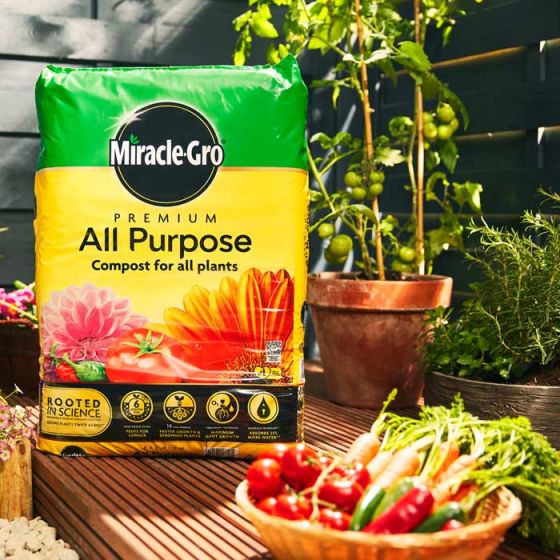
Dig up gladioli corms and remove the withered plate from the bottom of the new corm. If you spot small bulbils at the joint pull these off and plant up in pots of Miracle-Gro All Purpose Compost. Store in a cold frame where they can grow during next year.


Trailing types of pansies are relatively new to gardening. They provide an abundance of flowers and produce a great display in hanging baskets, window boxes and around the edge of large pots or patio containers. Most seem to be from the viola family providing bright clean colours and plenty of blooms. They can usually be found as ready-grown baskets at your local garden centre although Thompson & Morgan are selling plugs and packets of seed of a large flowered trailing pansy called ‘Plentifall’. It is a mixture of purple, yellow and white scented flowers that bloom on branching stems from mid-winter to the end of March. Other trailing types such as ‘Babbling Brook’ can be bought as seeds or plug plants from Suttons.

Positioning planted containers close to the house will help ensure a bright and cheerful outlook, even if it’s too miserable to actually venture outside. The house will also help provide some winter protection for the plants and the containers.

You can use all manner of plants to provide attractive foliage and interest throughout the winter. Low-growing plants that can be used for extra colour in containers include Vinca minor; Ajuga (bugle); Heuchera; Lamium (ornamental deadnettle) and Ivy. A dwarf or slow-growing shrub such as Skimmia, Euonymus fortunei or Sarcococca (winter box, with highly scented winter flowers) will provide a central point of interest. As with beds and borders, underplant with dwarf spring-flowering bulbs, such as daffodil, crocus and tulip.

Winter-flowering heathers are normally best planted separately in containers as they prefer moist, but free-draining acidic soil and a sunny position. Your garden centre will almost certainly have plenty of Erica carnea and Erica darleyensis in all manner of colours. Favourite heathers for winter flowering include ‘Springwood White’ and Springwood Pink’ and ‘Vivelli’ with bronze foliage and later purple flowers. Although they will survive when grown in a rock garden in slightly more alkaline soils they do best in containers when planted in Levington John Innes Ericaceous, either plant in groups of three, or combined with dwarf grasses and annuals to extend the season of interest.

Topical Tip
Complete the planting of spring bulbs using Miracle-Gro Expand ‘n Gro compost. It’s peat free and contains a long lasting source of nutrients that will feed the bulbs during next year while they are in full leaf.


There is still time to apply an autumn lawn feed such as EverGreen Autumn 2-in1 to your grass areas to help strengthen the grass this year and to get rid of any existing moss that may have developed during the wetter autumn months. The moss may be caused by heavy shade, starved grass, compact soil or poor drainage. In the worst case, this weed may be present throughout the year because of all four. Tackling the shade means trimming back overhanging trees and bushes and poor drainage can be corrected with spiking.

If your lawn area has developed a lot of moss it’s worth trying to improve the drainage. This means spiking the affected area to let in air, improve drainage and generally reduce the compaction of the soil. There are two methods. For slight moss problems drive a garden fork into the area at 15cm (6”) intervals as deep as possible. Where returning moss is a continual problem use a hollow tine tool that can be driven into the lawn to remove plugs of soil at regular intervals. These plugs need to be brushed off the lawn and the holes filled with good soil such as EverGreen Enriched Lawn Soil. This enriched dressing will improve the organic content of the soil, improve drainage and reduce compaction. As a result, roots of grass plants will be encouraged to root even deeper and the grass should become thicker and healthier.

In areas that get water-logged regularly you may need to build a soak-away system to take away any excess water. This could be a simple soak-away sunk at the lowest point of the lawn. Dig a hole 60cm (2ft) square and 1 metre (1yd) deep. Fill the bottom 60cm with broken bricks and other rubble – top this with a 15cm layer of small stones topped off with a layer of free-draining top soil. If the lawn still remains wet, then you may need to dig out gravel tunnels 30 cm down which will naturally take water from the lawn to the soak-away.

Topical Tip
If you haven’t fed your lawn in the last couple of months, treat the area with EverGreen Autumn 2 in 1 to green up the grass and kill off any moss patches that have developed now that the weather has turned much wetter.


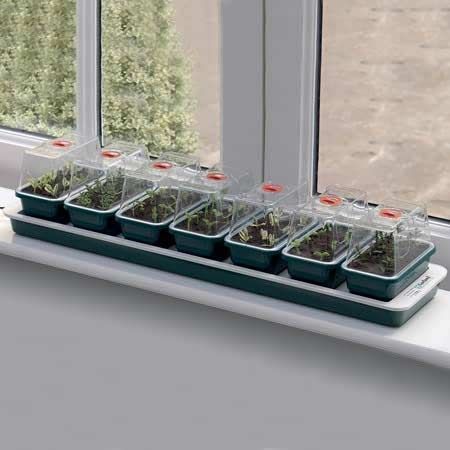
If you can provide a little shelter using a cold frame or plastic greenhouse it’s worth sowing seeds of broad beans to provide strong plants that can be planted out next spring for an early crop of these delicious vegetables. Because they grow in the hardest climates varieties such as ‘Aquadulce Claudia, ‘Imperial Greenpod’ and ‘The Sutton’ are reliable in all but the hardest of winters. Sow the seeds individually in pots of Miracle-Gro Seed & Cutting Compost as soon as possible and keep evenly moist.

Winter vegetables such as leeks, parsnips and celery should be ready to lift for the kitchen soon. Parsnips definitely taste sweeter once they have received a few hard frosts as the cold weather changes the carbohydrates in the stems to sugars. My leeks don’t look large enough for harvest yet as they took ages to germinate and even longer until they were big enough to transplant. Normally the small seedlings are ready for transplanting in May and June after digging early potatoes, but this year the cold, wet spring slowed growth to a snail’s pace.

If you are gardening on heavy soil you should carry on with winter digging. Digging before the New Year means there is more time for the frosts to work on the big clumps to break them down into fine soil. A dressing of Lime could help to sweeten the soil, especially where you are to grow potatoes.

Winter digging is hard work, especially if you are adding organic material rather than lime. To protect your back you need to work at a steady pace in short shifts - half an hour is usually long enough. To create deep beds of humus-rich soil, dig in plenty of organic matter. Use your own well-rotted garden compost, spent growing bags used for tomatoes or potatoes or specially purchased bags of Levington Organic Blend Soil Conditioner. All this organic material will improve the soil structure, increase fertility and substantially increase the water holding capacity of all soils, so don’t be stingy with it.

Now that onions and garlic are such an everyday kitchen ingredient it’s worth growing your own. The trick is to plant this side of Christmas to provide correct maturing and ripening during the height of summer. Japanese onions such as Senshyu do particularly well and so do some newer varieties such as ‘Shakespeare’ and ‘Hi Keeper’. Garlic doesn’t normally come with a descriptive variety name, so choose plump bulbs that haven’t started to shrivel.

For both onion sets and garlic treat the soil with a dressing of Growmore or Fish, Blood and Bone before raking into the surface. Break the garlic bulb into individual cloves and plant with the tip of each clove just below the soil surface. Do the same with the onion sets. Choose a sunny, well drained spot and feed regularly with Miracle-Gro Plant Food during spring and summer.

Topical Tip
Sow broad beans Aquadulce in October to provide a very early crop next spring. Garlic cloves can also be planted now so that they are fully ripe for mid summer.


Use plant protection products safely. Always read the label and product information before use.

EverGreen Autumn 2-in-1 contains ferrous sulphate. FungusClear® Ultra contains triticonazole.
SlugClear™ Ultra contains metaldehyde.


Click on one of the other months below to see what you can look forward to