




CARE AND ADVICE
February
It may be winter out there, but indoors it is warm enough to grow all manner of seeds and seedlings that are easily capable of bursting into new life. A mild spell outdoors will provide the opportunity to improve soil, get seedlings under way and prepare for a more beautiful garden this spring and summer.
It’s time to buy your seed potatoes and to set out the tubers so they can sprout in a light, cool position. For anyone that saw their potato foliage decimated by crippling blight disease and subsequently saw their crop of tubers much smaller than average and without storing qualities, you may like to consider buying blight-resistant varieties this year.
There are many of them to consider, some bearing the Sárpo name (pronounce Sharpo) but not all of them. First of these blight-busting superspuds was ‘Sárpo Mira’, a red-skinned maincrop that is great to start with although you could also try ‘Kifli’ a waxy, white-skinned “new” potato flavour or ‘Blue Danube’ a good roaster that has white flesh surrounded by a purplish-blue skin. Garden centres will be selling all these varieties and Thompson & Morgan are offering a collection of ten tubers of six Sárpo varieties for less than £20.
Whatever potato variety is your favourite, it pays to ‘chit’ the seed. That means setting out the tubers in egg boxes or trays with the ‘rose’ end uppermost in a cool (10oC – 50oF) but light spot to allow them to sprout. Planting doesn’t normally take place of maincrop varieties until March, but in the meantime you can prepare the soil by digging in plenty of organic matter into the bottom of trenches that are 75cm (2’, 6”) apart.
Before fruit trees and bushes burst into flower, dress the soil around the roots with Miracle-Gro Sulphate of Potash. This is one of the new Miracle-Gro “straight” fertilizers recently launched to the garden market. This one improves the strength and vigour of fruiting plants and increases the amount of potassium in the soil to improve flowering and fruiting. It’s ideal as the potassium nutrients are released quickly in time for flowering while at the same time improving resistance to bad weather and disease. Just a few handfuls to cover the area of the spreading branches is sufficient to improve fruit set. After application, dig the plant food into the top few centimetres of soil and then mulch the area with Levington Organic Choice Soil Conditioner. This will retain moisture in the soil and if a sufficient depth is achieved will also help to suppress weed growth.
TOPICAL TIP
Wait until March before sowing seeds of parsnips and carrots unless you have the benefit of protective cloches to warm the soil and keep off the frost. Parsnip Albion is an F1 hybrid seed from Suttons that promises early vigour.
There are many of them to consider, some bearing the Sárpo name (pronounce Sharpo) but not all of them. First of these blight-busting superspuds was ‘Sárpo Mira’, a red-skinned maincrop that is great to start with although you could also try ‘Kifli’ a waxy, white-skinned “new” potato flavour or ‘Blue Danube’ a good roaster that has white flesh surrounded by a purplish-blue skin. Garden centres will be selling all these varieties and Thompson & Morgan are offering a collection of ten tubers of six Sárpo varieties for less than £20.
Whatever potato variety is your favourite, it pays to ‘chit’ the seed. That means setting out the tubers in egg boxes or trays with the ‘rose’ end uppermost in a cool (10oC – 50oF) but light spot to allow them to sprout. Planting doesn’t normally take place of maincrop varieties until March, but in the meantime you can prepare the soil by digging in plenty of organic matter into the bottom of trenches that are 75cm (2’, 6”) apart.
Before fruit trees and bushes burst into flower, dress the soil around the roots with Miracle-Gro Sulphate of Potash. This is one of the new Miracle-Gro “straight” fertilizers recently launched to the garden market. This one improves the strength and vigour of fruiting plants and increases the amount of potassium in the soil to improve flowering and fruiting. It’s ideal as the potassium nutrients are released quickly in time for flowering while at the same time improving resistance to bad weather and disease. Just a few handfuls to cover the area of the spreading branches is sufficient to improve fruit set. After application, dig the plant food into the top few centimetres of soil and then mulch the area with Levington Organic Choice Soil Conditioner. This will retain moisture in the soil and if a sufficient depth is achieved will also help to suppress weed growth.
TOPICAL TIP
Wait until March before sowing seeds of parsnips and carrots unless you have the benefit of protective cloches to warm the soil and keep off the frost. Parsnip Albion is an F1 hybrid seed from Suttons that promises early vigour.
Some bedding plants are relatively slow growers and need several months to transform from seeds to plants ready to flower. Tender geraniums, begonias and lobelia are examples that ideally need to be sown now so that they receive 18 to 20 weeks of growth and are ready for planting out when frosts are finished around the end of May.
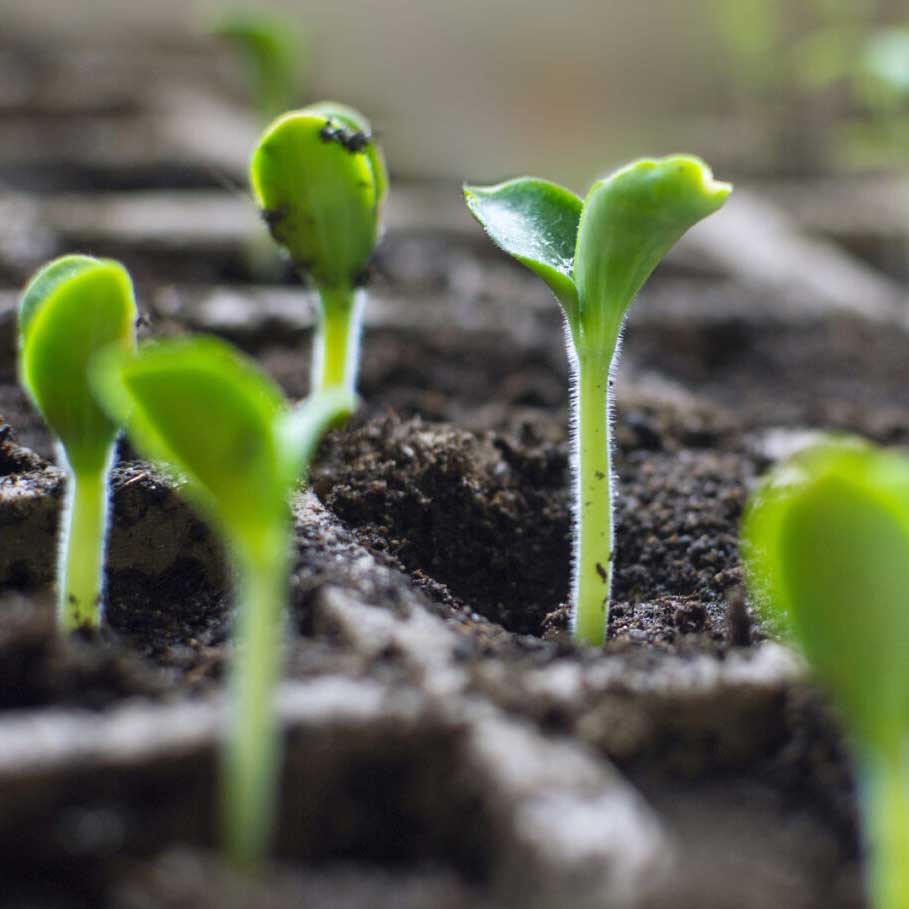
It doesn’t matter what the weather is like, as long as you have a warm spot for germination and a bright windowsill on which the seedlings can grow. You just need patience for this early bird gardening that will save you plenty of money compared with buying garden-ready plants in May.
Simply take a clean plastic seed tray and fill it with fresh Miracle-Gro Seed & Cutting Compost. Use a flat piece of wood to level the surface and then place the tray in a shallow bowl of water to gradually moisten the compost from the bottom. As with all composts it pays to buy fresh every season as the nutrients available to the roots diminishes gradually after the bag is opened. Saving pennies by using up old compost is rarely the way to ensure good strong growth. Instead it can spell disaster and a total waste of your investment in packets of seed.
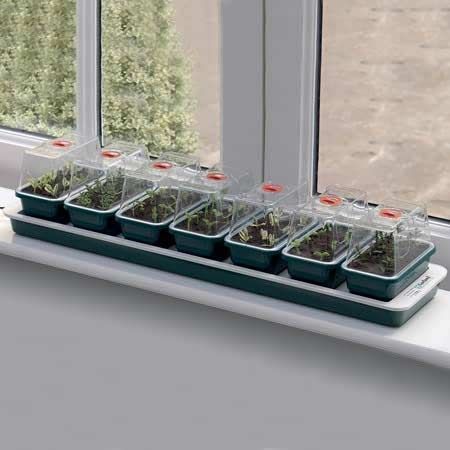
Follow the pack instruction on your flower seed packet as to whether you should cover the seed with more compost and the temperature required for germination. Bedding begonias need light while geraniums require darkness. To keep the compost evenly moist while germination occurs, I find it useful to cover the tray with a plastic dome or slip the whole seed tray inside a white or clear plastic bag. Geraniums, begonia and lobelia germinate best in warm conditions of 24oC (75oF). Unfortunately they require this temperature consistently for fastest germination, which is where a thermostatically controlled propagator comes in really handy.
Alternatively your local garden centre or nursery will sell ready germinated seedlings that are much easier for novice gardeners to grow. A professional plant propagator will have already done the harden work of germination and your job is to give the plant enough space and light to grow to flowering size.
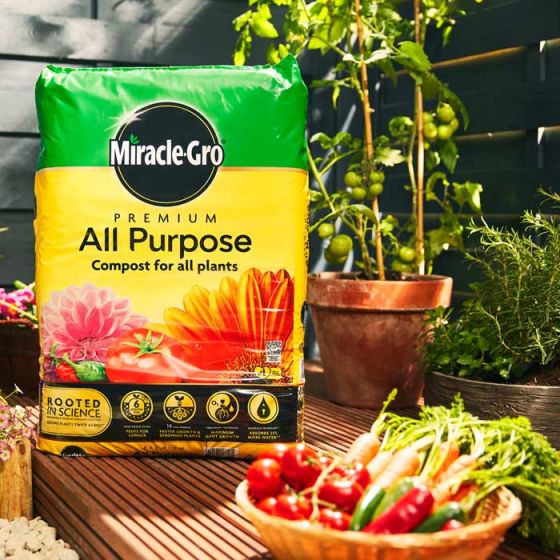
To get these tiny treasures growing fast give them extra room and root space in a tip-top compost of your choice. Do this immediately after buying or otherwise the seedlings could easily dry out or grow lanky looking for light. For best results use trays that are ready separated into individual cells and a rich compost such as Miracle-Gro Expand ‘n Gro or Miracle-Gro All Purpose Enriched Compost. Placed on a sunny windowsill, your plants will take a few weeks to get to a large enough stage that they need small but individual pots.
Giving these seedling plants and any others you buy steadily more room for roots to thrive is the best way to encourage sturdy growth. If you put seedling plants into too big a pot right from the beginning they do tend to sulk and not grow quickly, mainly because the large amount of compost, relative to the root ball, remains wet and cold.
If you are new to geraniums from seed you will be pleased to find that Thompson & Morgan offer their ‘World’s Top Six Mix’ of 30 seeds for £9 that includes the pink Horizon Salmon or Mr Fothergill’s Mophead Selection of several different vibrant colours for just over £3 for 10 seeds. Alternatively if you are happy to grow just tradition deep crimson geraniums why not try a packet of Suttons Vista Red that contains 25 seeds for just £3.55?
TOPICAL TIP
Take time to plan your flower borders, beds, hanging baskets and patio pots so you can buy packets of seed, pots of seedling plants or plug plants at the right time when there is maximum choice.
It doesn’t matter what the weather is like, as long as you have a warm spot for germination and a bright windowsill on which the seedlings can grow. You just need patience for this early bird gardening that will save you plenty of money compared with buying garden-ready plants in May.
Simply take a clean plastic seed tray and fill it with fresh Miracle-Gro Seed & Cutting Compost. Use a flat piece of wood to level the surface and then place the tray in a shallow bowl of water to gradually moisten the compost from the bottom. As with all composts it pays to buy fresh every season as the nutrients available to the roots diminishes gradually after the bag is opened. Saving pennies by using up old compost is rarely the way to ensure good strong growth. Instead it can spell disaster and a total waste of your investment in packets of seed.
Follow the pack instruction on your flower seed packet as to whether you should cover the seed with more compost and the temperature required for germination. Bedding begonias need light while geraniums require darkness. To keep the compost evenly moist while germination occurs, I find it useful to cover the tray with a plastic dome or slip the whole seed tray inside a white or clear plastic bag. Geraniums, begonia and lobelia germinate best in warm conditions of 24oC (75oF). Unfortunately they require this temperature consistently for fastest germination, which is where a thermostatically controlled propagator comes in really handy.
Alternatively your local garden centre or nursery will sell ready germinated seedlings that are much easier for novice gardeners to grow. A professional plant propagator will have already done the harden work of germination and your job is to give the plant enough space and light to grow to flowering size.
To get these tiny treasures growing fast give them extra room and root space in a tip-top compost of your choice. Do this immediately after buying or otherwise the seedlings could easily dry out or grow lanky looking for light. For best results use trays that are ready separated into individual cells and a rich compost such as Miracle-Gro Expand ‘n Gro or Miracle-Gro All Purpose Enriched Compost. Placed on a sunny windowsill, your plants will take a few weeks to get to a large enough stage that they need small but individual pots.
Giving these seedling plants and any others you buy steadily more room for roots to thrive is the best way to encourage sturdy growth. If you put seedling plants into too big a pot right from the beginning they do tend to sulk and not grow quickly, mainly because the large amount of compost, relative to the root ball, remains wet and cold.
If you are new to geraniums from seed you will be pleased to find that Thompson & Morgan offer their ‘World’s Top Six Mix’ of 30 seeds for £9 that includes the pink Horizon Salmon or Mr Fothergill’s Mophead Selection of several different vibrant colours for just over £3 for 10 seeds. Alternatively if you are happy to grow just tradition deep crimson geraniums why not try a packet of Suttons Vista Red that contains 25 seeds for just £3.55?
TOPICAL TIP
Take time to plan your flower borders, beds, hanging baskets and patio pots so you can buy packets of seed, pots of seedling plants or plug plants at the right time when there is maximum choice.
Crocus and snowdrops will be popping through now in patio containers and sunny flower borders. To increase your collection you can buy potted bulbs from garden centres that are ready to bloom. If on the other hand you have crowded clumps of snowdrops that are not producing many flowers then they can be dug up and replanted while they are 'in the green'.
Dig new holes for planting and improve the drainage of the soil with sharp sand or grit. Leave enough room between each bulb so that the bulbs have room to swell and feed with diluted Miracle-Gro Plant Food every week while the plants retain their foliage. While you are studying your snowdrop collection, look out for foliage that carries a mould. In mild, wet winters the leaves and stems can be infected with grey mould fungus. If you see these symptoms or black spots on the bulbs which show the dormant stage of the disease, then throw away the infected plants so that you can protect the rest of your collection.
TOPICAL TIP
As soon as flowers have faded on any bulb pick off the dead heads so that all the plant's energy goes to producing next year's flowers rather than seed pods.
Dig new holes for planting and improve the drainage of the soil with sharp sand or grit. Leave enough room between each bulb so that the bulbs have room to swell and feed with diluted Miracle-Gro Plant Food every week while the plants retain their foliage. While you are studying your snowdrop collection, look out for foliage that carries a mould. In mild, wet winters the leaves and stems can be infected with grey mould fungus. If you see these symptoms or black spots on the bulbs which show the dormant stage of the disease, then throw away the infected plants so that you can protect the rest of your collection.
TOPICAL TIP
As soon as flowers have faded on any bulb pick off the dead heads so that all the plant's energy goes to producing next year's flowers rather than seed pods.
With winter rains well above average it’s not surprising to find reservoirs are at their highest levels for many a long year. In England & Wales overall reservoir stocks were at their second highest level on record - just exceeded by the year 2000. That means that soils really are fully soaked and many of us will have to improve drainage if we are to obtain a good crop of flowers, fruit and vegetables in 2013.
The bottom line is that to garden successfully we will need to improve all soils so they can cope. Beefing up the amount of organic matter in all soils will help in all seasons – it will improve drainage in autumn and winter and increase water-holding capacity in summer. Just what's needed.
If your garden compost heap has produced dark, rich, crumbly material then use that – it's free. But if the material is wet and slimy give it a miss and buy some material that will improve the drainage rather than making it worse. Several bags of Levington Organic Blend Soil Conditioner will work wonders on wet, clay soils as the coarse, fibrous material will open up pockets of air within the clods and provide drainage channels for any further rain. On a light, sandy soil it will hold extra rain and any additional nutrients you apply.
There is no limit to the amount of Soil Conditioner that your plot will appreciate. Dig some in during winter and improve the surface again just before you sow seeds or plant out seedlings. Just remember that it will do more than improve the texture, drainage and water-holding capacity of your soil. The extra organic matter will provide home for millions more beneficial micro-organisms and help increase the availability of nutrients.
Not that feeding can be ignored. For all your plants to produce maximum growth and flower to their full potential they also need to draw on plant nutrients as they need them. Thankfully the Miracle-Gro Company has launched for 2013 a new range of fertilisers that will provide nutrients for all sorts of conditions and all sorts of gardeners. Many of them are organic such as Miracle-Gro Bone Meal, Chicken Manure and Fish, Blood and Bone. Others supply just one element of the nutrient balance such as Miracle-Gro Superphosphate (Phosphates), Sulphate of Ammonia (Nitrogen) and Sulphate of Potash (Potassium). These allow gardeners to balance the nutrient levels in their soil to suit different types of crops. For example green leafy vegetables such as cabbages and other brassicas need plenty of nitrogen and a dressing of Miracle-Gro Sulphate of ammonia will encourage fast strong growth, whereas Superphosphate promotes strong and healthy rooting and is an ideal supplement where you are growing carrots and parsnips.
TOPICAL TIP
Check the pH balance of your soil to see if it is acid (numbers 6 and below), alkaline (numbers above 7) or nearly neutral (7). Most vegetables will thrive on a slightly acid soil in the numerical range of 6.0 to 7.0 and if your test provides an acid indicator below 6 you should dress the soil with Miracle-Gro Lime.
The bottom line is that to garden successfully we will need to improve all soils so they can cope. Beefing up the amount of organic matter in all soils will help in all seasons – it will improve drainage in autumn and winter and increase water-holding capacity in summer. Just what's needed.
If your garden compost heap has produced dark, rich, crumbly material then use that – it's free. But if the material is wet and slimy give it a miss and buy some material that will improve the drainage rather than making it worse. Several bags of Levington Organic Blend Soil Conditioner will work wonders on wet, clay soils as the coarse, fibrous material will open up pockets of air within the clods and provide drainage channels for any further rain. On a light, sandy soil it will hold extra rain and any additional nutrients you apply.
There is no limit to the amount of Soil Conditioner that your plot will appreciate. Dig some in during winter and improve the surface again just before you sow seeds or plant out seedlings. Just remember that it will do more than improve the texture, drainage and water-holding capacity of your soil. The extra organic matter will provide home for millions more beneficial micro-organisms and help increase the availability of nutrients.
Not that feeding can be ignored. For all your plants to produce maximum growth and flower to their full potential they also need to draw on plant nutrients as they need them. Thankfully the Miracle-Gro Company has launched for 2013 a new range of fertilisers that will provide nutrients for all sorts of conditions and all sorts of gardeners. Many of them are organic such as Miracle-Gro Bone Meal, Chicken Manure and Fish, Blood and Bone. Others supply just one element of the nutrient balance such as Miracle-Gro Superphosphate (Phosphates), Sulphate of Ammonia (Nitrogen) and Sulphate of Potash (Potassium). These allow gardeners to balance the nutrient levels in their soil to suit different types of crops. For example green leafy vegetables such as cabbages and other brassicas need plenty of nitrogen and a dressing of Miracle-Gro Sulphate of ammonia will encourage fast strong growth, whereas Superphosphate promotes strong and healthy rooting and is an ideal supplement where you are growing carrots and parsnips.
TOPICAL TIP
Check the pH balance of your soil to see if it is acid (numbers 6 and below), alkaline (numbers above 7) or nearly neutral (7). Most vegetables will thrive on a slightly acid soil in the numerical range of 6.0 to 7.0 and if your test provides an acid indicator below 6 you should dress the soil with Miracle-Gro Lime.
Garden centres will have a good display of lilies that need planting up in pots and in the garden ready for summer display. They appreciate good drainage directly under the bulbs so plant carefully. Put a layer of Miracle-Gro All Purpose Compost in the bottom of the container and then a layer of gravel or sharp grit. Place the bulbs on top of this gravel and fill the container with more compost.
Keep dead-heading winter pansies and feed occasionally with Miracle-Gro Plant Food when the weather is mild.
If you've not studied the rose section in your garden centre recently, you'll be surprised at how many miniature and patio roses have been bred for modern gardens. Many are recommended for growing in pots and tubs as they are small and delicate yet continue to flower through until the winter. Some, like the clean white of Pour Toi (For You) have been around since 1946, before the invention of patios. Recent introductions since 2000 include Happy Days, an amber-pink spreader, Paper Anniversary with clusters of white, tinged with pink and green blooms and Little Amy a yellow rose with pink outside flush to each petal.
All patio roses need to be potted in a decent compost such as Miracle-Gro Moisture Control Compost. This contains enough continuous release plant food for the first year, but it will need topping up in subsequent years with a good handful of Miracle-Gro Rose & Shrub Continuous Release Plant Food worked into the compost surface.
TOPICAL TIP
Move pots of flowering bulbs around on the patio to ensure you can appreciate the developing blooms from the closest house window.
Keep dead-heading winter pansies and feed occasionally with Miracle-Gro Plant Food when the weather is mild.
If you've not studied the rose section in your garden centre recently, you'll be surprised at how many miniature and patio roses have been bred for modern gardens. Many are recommended for growing in pots and tubs as they are small and delicate yet continue to flower through until the winter. Some, like the clean white of Pour Toi (For You) have been around since 1946, before the invention of patios. Recent introductions since 2000 include Happy Days, an amber-pink spreader, Paper Anniversary with clusters of white, tinged with pink and green blooms and Little Amy a yellow rose with pink outside flush to each petal.
All patio roses need to be potted in a decent compost such as Miracle-Gro Moisture Control Compost. This contains enough continuous release plant food for the first year, but it will need topping up in subsequent years with a good handful of Miracle-Gro Rose & Shrub Continuous Release Plant Food worked into the compost surface.
TOPICAL TIP
Move pots of flowering bulbs around on the patio to ensure you can appreciate the developing blooms from the closest house window.
Click on one of the other months below to see what you can look forward to

Information about what tasks should be carried out for this month.
Monday - Saturday 9.00am - 6.00pm
Keep up to date about our fantastic offers and events.