



CARE AND ADVICE

August
Gardens are brimming with colourful blooms that will attract bees and other pollinating insects to our home plots. Dahlias, clematis, buddleias and lavenders should be providing a good show of flowers while runner beans, French beans and autumn raspberries are blooming in profusion. School is out for summer holidays and it’s an ideal time to get children more involved in growing plants in your garden and picking and eating the fruits of your labours.

If we are blessed with warm summer sunshine this August then watering of annual garden flowers may become necessary, especially for those with a limited root run and a tendency to wilt when water is in short supply. To hold in as much natural rainwater as possible a mulch of Levington Water Saving Decorative Bark spread over the soil will also create an attractive surface that will also reduce the amount of annual weeds that can easily develop.

Although deep rooted perennial flowers such as roses, cone flowers (Helenium and Echinacea), Tickseed (Coreopsis) and false sunflower (Heliopsis) are relatively drought resistant they are not all immune from summer pests or diseases. Roses are particularly susceptible to attack by greenfly (aphids) and diseases including powdery mildew and rose black spot. But thank goodness for sprays such as RoseClear Ultra that can control the development of these problems with a simple spray. Further treatments 14-21 days apart will protect new foliage.

Dahlias will be starting to bloom and will need staking to ensure winds don’t damage tall stems. Regular watering and feeding is an essential job for sizable blooms because they are hungry and thirsty plants. If your flower buds or new leaves are being nibbled at to produce irregular holes, then you can be pretty sure that earwigs are the culprits. For natural control it’s an easy job to make traps with straw inside a plant pot upturned on top of a cane. Empty the traps daily over boiling water to destroy these hidden pests.

August is a great time to start taking cuttings of all manner of flowers to give you more plants to fill spaces in your flower garden or fresh new plants to replace old, worn-out specimens. Prime subjects include geraniums, pelargoniums, felicia, osteospermums and argyranthemums. Not only do the cuttings root more easily in August they also grow into decent sized plants that are much easier to overwinter on your windowsills.

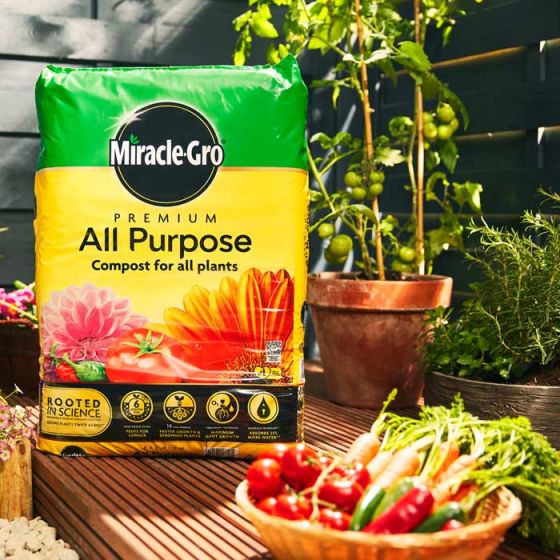
Select strong, short-jointed side shoots and cut cleanly just below a leaf joint so the cutting is 6 to 8cm long. Remove the bottom leaves and then push your cuttings around the edge of a pot filled with Levington Seed & Cutting Compost or John Innes No.1 compost. A fine spray of water will help to water them in and a covering of newspaper will give them some shade until they start to take root. After about four weeks the new plants should have rooted and can be planted up into individual pots of Miracle-Gro All Purpose Compost.

Rhododendrons should be forming flower buds for next year’s blooms as long as they have moisture at the roots and a suitable plant food to encourage balanced growth. For great results year after year use rainwater because this always contains less lime than tap water. Regular feeding will ensure your rhododendrons, azaleas, camellias and other acid-loving plants produce better blooms. Miracle-Gro Azalea, Camellia & Rhododendron Liquid Plant Food is a unique plant tonic that when used regularly will ensure stunning flower displays for all acid-loving plants. Commonly grown acid-loving plants also include heathers, pieris, blueberries and ferns. Simply add a capful of this nutrient rich concentrated plant tonic to each gallon of rainwater and wet the foliage and root area of these acid-loving plants every fortnight until the end of summer.

Topical Tip
Plant up autumn flowering bulbs such as naked ladies (colchicum), nerines and autumn crocus for an unusual finish to the flowering season.


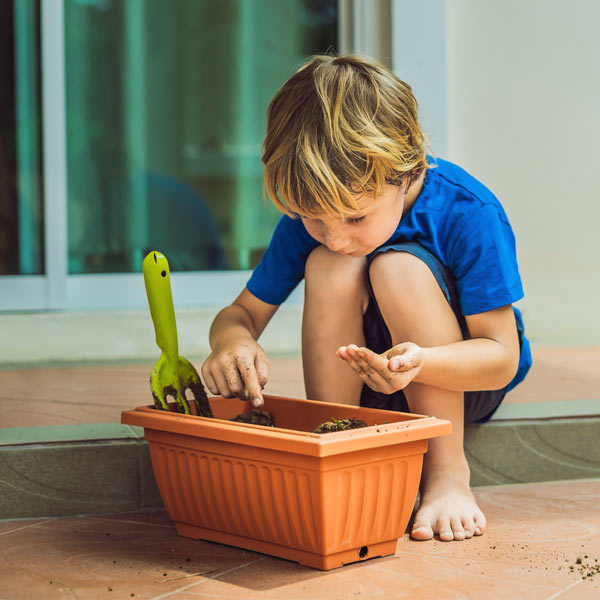
Watering is needed for container grown plants every few days, even if we have substantial rainfall. So get your children involved with a watering can around the patio. It’s never too early to teach them some tricks of correct irrigation. For example, you can fit pot saucers under each container to catch any excess liquid. It’s then a matter of revisiting the saucer ten minutes after initial application to dispose of any water not drawn up by the compost by capillary action. This teaches the lesson of applying the right amount of water and not to waste this precious resource.

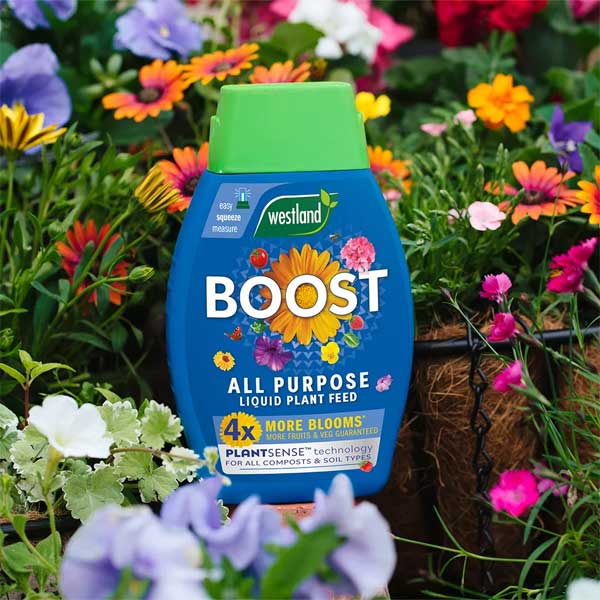
Correct feeding is another lesson worth teaching. Adding some soluble plant food, such as Miracle-Gro, into the watering can every 10 days or so is just right to encourage strong flowering and great fruiting. Just show your charges that the crystals need to be stirred thoroughly so all the nutrients are diluted in the water. You can then show them that this watering can full of ‘flower power’ can be applied over plant leaves if the sun isn’t shining strongly and as a result the nutrients will be absorbed through the leaves almost instantly.

Another useful job for tiny fingers is the removal of dead flower heads to prevent the formation of seeds. Hanging baskets and containers that contain seed-forming plants such as fuchsias, pelargoniums, verbena and lobelia need to have dead flowers removed as soon as the petals fade. In that way the plant is tricked into producing even more flowers for continuous display.

Keep an eye on flowering pot plants such as fuchsias, cyclamen, begonias and primulas for lack of vigour. These types of plants are very susceptible to damage by black vine weevil that eat through the root system. If you suspect these pests have invaded your pot plants check the root systems for white horseshoe shaped grubs with brown heads. If you find them drench the compost of affected plants with BugClear Ultra Vine Weevil Killer. It contains a systemic insecticide that will control a wide range of bugs that may be nibbling at the plant or sucking its sap.

Greenfly and blackfly are much more easily spotted and can be rapidly controlled with BugClear Ultra Gun! which can be used to treat all decorative flowering plants and some fruit and vegetables listed on the label.

Ants are sure to be on the run now that hot, dry weather is with us. It’s relatively easy to treat those worker ants that appear on the patio with the Ant Stop! Gun! or in the kitchen with an Ant Stop! Bait Station.

Topical Tip
Dead head all annual flowers growing in pots, containers and hanging baskets to prolong their blooming time into autumn.


Mowing and edge trimming will remain weekly jobs if your lawn is to continue to look really great for your family and visitors. Remove all trimmings from the surface or people using the area for games, picnics and general romping will be covered in grass cuttings.
If you are going away on holiday mow the grass just before you leave but don’t be tempted to set the mower extra low as this can damage the grass if followed by hot, dry weather. Real lawn fanatics will arrange for a neighbour to cut the grass again whilst you are away, but this is not necessary as the long grass after a fortnight can be gradually reduced in length over the next two cuttings.
If you are not going away you can be sure the weather is likely to be moist and warm – it is school holidays, after all. With weeds still growing strongly this is probably the final month when lawn weedkillers have maximum effect. For great control of most broad-leaved weeds spray the whole lawn with Verdone Extra. It contains three selective weedkillers that do not harm established grass.


Children should be encouraged to gather food crops from the garden and be shown different ways that they can be enjoyed at the dining table. Many gardens will have all manner of vegetables ready to gather for the kitchen including potatoes, tomatoes, climbing beans and courgettes.
For continuous crops of ripe tomatoes you will need to pinch out any side shoots from standard varieties such as Shirley, Gardeners Delight and Sungold and give them a feed of Liquid Tomorite every 10 days. This concentrated plant food is rich in the major nutrients and awash with trace elements and magnesium to encourage strong plant growth and big tasty tomatoes.

Climbing beans will need a high nitrogen food applied over the leaves and around the roots to ensure they continue producing crops until the first frost. I prefer to use the Miracle-Gro hose-end Liquafeed system that automatically dilutes the bottled concentrate plant food and makes the job a quick and easy one that eliminates the need to carry heavy watering cans full of water. Just remember to apply the spray to the foliage when the sun has lost its power in the evening or first thing in the morning.
After foliage has died off and growing complete, lift onions, garlic and shallots to dry off thoroughly for a week or so before storing under cover. The best way to ensure complete drying out of the bulbs is to make a raised bed of chicken wire out in the sun so that air circulates around the bulbs If you handle the garlic bulbs carefully there should be enough foliage intact to make it possible to plait them into a string. Store the garlic in your driest spot, away from steamy cookers and washing machines.
There’s still time to sow seeds of leafy salad crops including lettuce, land cress, mizuna and other curly leaves. Loose-leaf lettuce varieties such as Salad Bowl, Oak-leaf, Lolla Rossa and Lolla Bionda are all worth finding space for - especially if we are blessed with a late summer spell of warm weather.

Plant out winter cabbage and Brussels sprout plants where they are to crop. If pigeons are a local problem cover them immediately with netting to prevent the leaves from being stripped from the stem. During the next few weeks keep an eye on the developing brassicas to see if cabbage white butterfly is using them to lay their eggs. If these yellow eggs are noticed on the underside of the foliage they can be rubbed off with a gloved finger. If you are too late for this preventative measure then you will need to spray the plants as soon as you see emerging caterpillars.

BugClear Gun! for Fruit & Veg is a quick-acting and ready-to-use spray. It contains a naturally occurring insecticide called pyrethrins that is extracted from the flowers of a member of the chrysanthemum family. The fast-acting pyrethrins insecticide will give excellent control of many common pests including greenfly, blackfly, whitefly, caterpillars and red spider mites.
This versatile product can be used all around the garden or greenhouse on all vegetables and fruit, plus roses, flowers and decorative shrubs. Food crops can be safely harvested and eaten the day after treatment.

Keep transplanting young leeks to their final cropping position. Ensure the soil is moist and enriched with a general plant food such as Miracle-Gro Gro Your Own Vegetable and Fruit Plant Food. Make deep planting holes with a dibber and drop the roots of one seedling into position. A good watering in the hole will ensure the roots are imbedded deep within the soil.

Topical Tip
Canes of summer raspberries will have finished fruiting and can be cut back to ground level. Tie in the canes along wire supports and dress the surface with well-rotted garden compost to encourage strong rooting.


Use plant protection products safely. Always read the label and product information before use.
Ant Stop!® Granules contain spinosad. Ant Stop! Gun! contains deltamethrin. Ant Stop! Bait Station contains fipronil. BugClear® Ultra Gun!™ and BugClear.® Ultra Vine Weevil Killer contain acetamiprid. BugClear Gun! for Fruit & Veg contain pyrethrins. EverGreen Complete contains MCPA, dichlorprop-P, dicamba and ferrous sulphate. Roseclear® Ultra contains triticonazole and acetamiprid. Verdone Extra contains fluroxypyr, clopyralid and MCPA.


Click on one of the other months below to see what you can look forward to